The way to handle mud season is to stop the mud at the door: a scraper mat outside, an absorbent mat inside, a boot tray, and a shoes-off habit. Then sweep or vacuum the entry every day and mop it at least weekly, because grit left on the floor scratches finishes. A professional clean at the end of mud season resets the whole house.
Why is mud season so hard on New Hampshire floors?
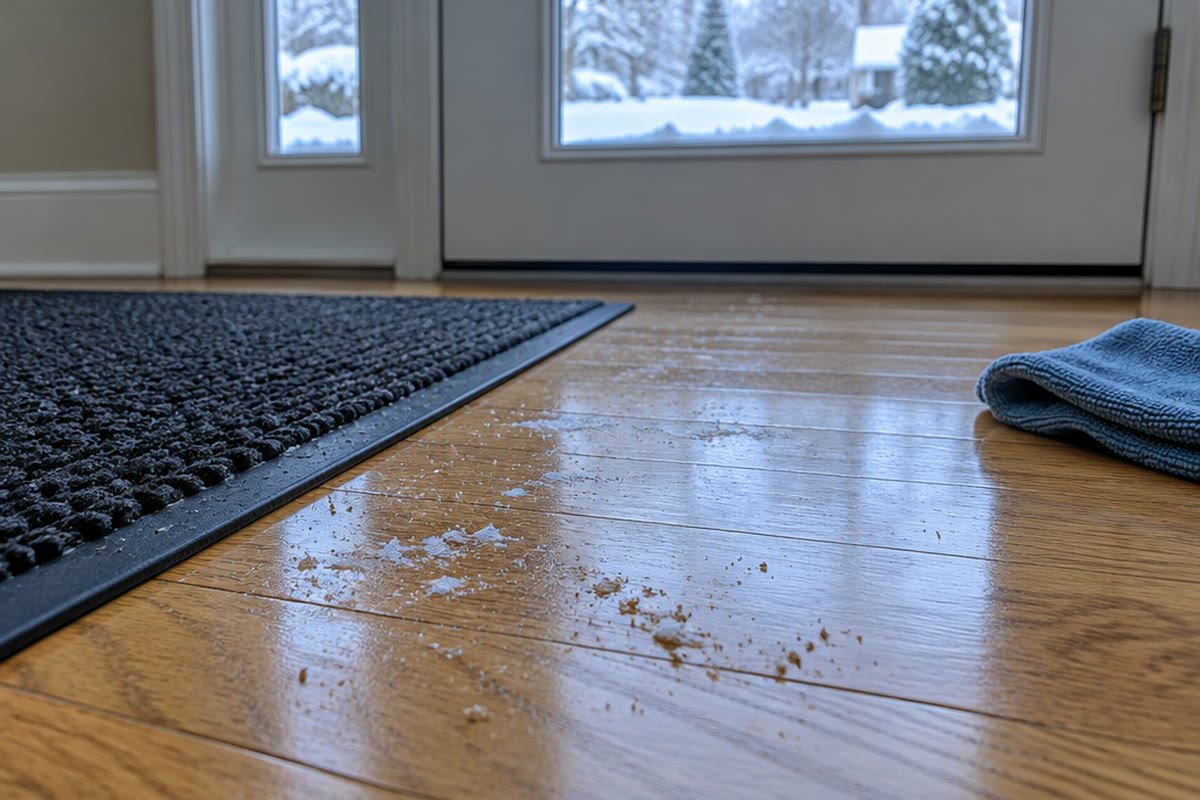
Mud season arrives in early spring as the ground thaws from the top down. Frozen soil underneath keeps the water from draining, so driveways, paths and dirt roads turn soft. Everything that crosses them comes inside: wet soil, leftover road sand and the last of the winter salt. Once it dries on the floor, it turns into fine grit that works into rugs and grinds against wood, vinyl and tile with every step.
How do you set up the entry to catch mud at the door?
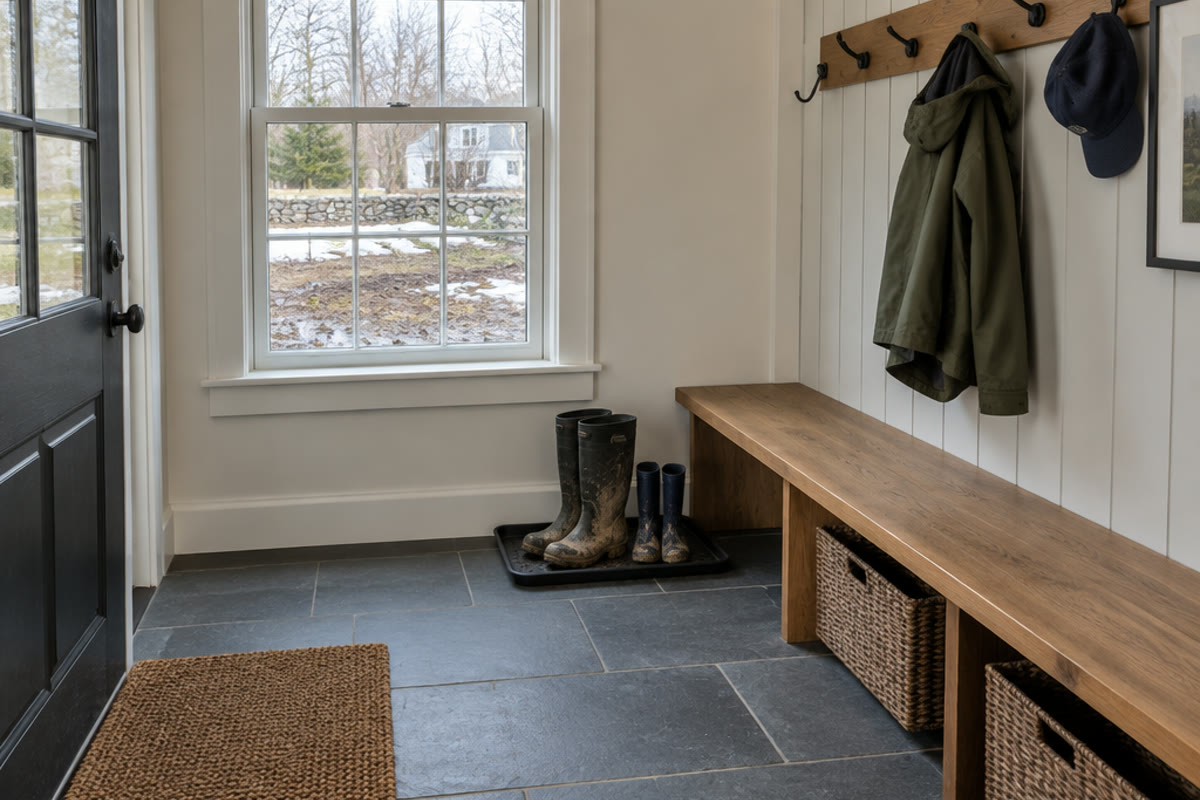
- A stiff outdoor scraper mat to take off the worst of it before anyone steps inside.
- A large absorbent indoor mat, long enough for two or three steps, to catch water and fine soil.
- A boot tray with a raised edge, so meltwater and mud stay off the floor.
- A bench or chair so people can take boots off without walking further in.
- Hooks for wet jackets and a spot for dog towels, if you have a dog.
If you have a mudroom, treat it as a working room for these weeks. If not, a front hall with a good mat and a boot tray does much of the same job.
A simple daily and weekly routine
Daily: shake out or vacuum the indoor mat, empty the boot tray if it has standing water, and sweep or vacuum the first few feet of floor inside the door. This takes a few minutes and stops grit from spreading through the house.
Weekly: mop the entry and kitchen floors, wash or hose off the boot tray, and vacuum rugs in rooms people walk into straight from outside. Let mats dry fully before putting them back, so they do not trap moisture against the floor.
Let mud dry before you clean it off carpet or rugs. Dried mud mostly vacuums away; wet mud tends to smear deeper into the fibers.
How do you protect wood and other floor finishes?
Grit is the main threat to finished floors, so frequent dry cleaning (sweeping or vacuuming) does more good than heavy wet mopping. When you do mop, use a damp mop rather than a wet one on wood, and follow the floor maker’s care instructions. Felt pads on chair legs near the entry help, since chairs drag grit across the floor. Wipe up standing water from boots and paws promptly.
When should you bring in help?
By the end of mud season most homes have grit in the corners, along baseboards, under furniture near the door and in rugs. A deep clean is a good way to reset everything at once. If the mess comes back every week, recurring cleaning every week or every two weeks keeps floors from building up between visits, and the more often you book, the lower each visit costs.
Whole-home baseboards are a $50 add-on, useful after a season of tracked-in dirt. Choose Book Now to schedule; the final price is confirmed when you book.
Frequently asked questions
When is mud season in New Hampshire?
It usually runs through early spring as snow melts and the ground thaws, often March into April. Timing varies by year, elevation and how much snow fell.
How do I get dried mud out of a rug?
Let it dry completely, break up any clumps, then vacuum slowly from several directions. Treat any remaining mark following the rug maker’s care instructions.
Is a boot tray better than a mat?
They do different jobs. A mat catches dirt and water from footsteps; a boot tray holds wet boots so meltwater stays contained. Most entries benefit from both.
Should I deep clean after mud season?
It is a good time for one. Grit tends to collect in corners, along baseboards and in rugs by the end of the season, and a deep clean resets the house before spring.